By Brad Janssen

A local pro explains what to do first, how fast removal can happen, and how we keep kids and pets safe—plus prevention that actually works.

Key Takeaways

  • If you see heavy wasp activity or a visible nest, don’t swat or spray blindly—identify the species and location, then choose the safest path.
  • Professional removal in the DSM metro can typically be same-day or next-day during peak season, with safety protocols for children, pets, and pollinators.
  • Long-term relief requires a two-part plan: remove/treat today’s nest and seal or modify the conditions that invited it.
  • DIY can handle very small, accessible paper wasp nests; call a pro for large nests, aerial/hard-to-reach locations, allergies, or repeated re-nesting.
  • Expect written scope, safety notes, and warranty from reputable providers.

Explore services and schedule a visit at Janssen Pest.


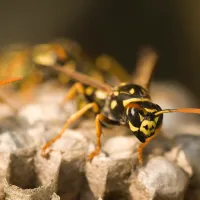
Wasp issues escalate quickly: one day you notice a few scouts; the next, there’s a steady flight path at the eaves or playset. As a Des Moines–area provider, we’re called to everything from hand-sized paper wasp nests to hidden colonies under siding and hornet nests the size of a basketball. This guide shows you what to do first (and what not to do), what professional removal actually involves, and the prevention steps that keep nests from returning—so you can act with confidence and keep your family safe.


Step 1: Pause, observe, and map the risk

Before anyone grabs a can of spray, take 30–60 seconds to observe from a safe distance:

  • Flight paths: Are wasps traveling to a single spot (eave gap, soffit edge, deck joist) or to a visible paper nest?
  • Location: Ground level? Second story? Under decking? Inside a wall void?
  • Traffic level: A few scouts vs. a continuous stream indicates different nest sizes.
  • Household factors: Allergies, small children, pets, or weekend events near the area? Safety dictates the timeline.

These details inform the approach. Aerial nests (high eaves, gables, trees) and void nests (under siding, in soffits) require different tools and products than an exposed paper nest on a fence.


Step 2: Decide—DIY or professional?

DIY may be reasonable when:

  • The nest is small, clearly visible and accessible, and you can keep children/pets indoors.
  • You have proper PPE (eye protection, gloves, long sleeves) and can work in cooler hours (dawn/dusk) when activity is low.
  • You understand the species: paper wasps are less aggressive than bald-faced hornets.

Call a pro immediately when:

  • The nest is large, high, or hard to access (ladders, roof lines, tree canopies).
  • Wasps are entering the home through siding/soffits (void nests require targeted dusting/foaming—surface sprays won’t solve it).
  • There are known allergies, nearby play areas, or you’ve had re-nesting in the same spots.
  • You suspect bald-faced hornets or yellowjackets (more aggressive; stings can be medically significant).

What professional removal looks like

A good service is more than “spray and go.” Here’s our standard approach as local technicians:

  1. Inspection & ID
    We confirm species, locate the primary nest and any secondary activity, and check for entry points (gaps at soffits, fascia, siding laps, attic vents).
  2. Safety protocol
    We establish a safety perimeter, review kid/pet re-entry timing, and determine whether ladders, pole systems, or a lift is needed. If pollinators (honeybees) are present, we do not treat—we’ll advise on humane relocation options instead.
  3. Targeted treatment/removal
  • Exposed nests (paper wasps/hornets): We apply a quick-knockdown followed by a residual product, remove the nest, and wipe/neutralize pheromone trails so the site is less attractive later.
  • Void nests (under siding/soffit): We use non-repellent dusts/foams via access points to reach the colony, then evaluate if minor sealing is advisable after activity ceases.
  1. Site cleanup & prevention
    We remove accessible nest material, bag and dispose, and discuss exclusion: sealing small gaps, screen repairs, installing insect-resistant vent covers, and trimming vegetation that bridges to eaves.
  2. Warranty & aftercare
    You’ll get a written scope, any re-service windows, and clear guidance on when it’s safe to use adjacent spaces.

Safety: kids, pets, and neighbors

We time treatments to low-activity windows whenever possible, keep children/pets indoors, and share re-entry guidance. For multi-unit or close-set homes, we coordinate with neighbors to avoid surprises.


Why nests come back (and how to stop it)

Wasps re-nest where conditions are perfect: gap + shelter + structure. After removal, address the “invites”:

  • Seal micro-gaps at soffit/fascia joints, cable/utility penetrations, and siding transitions.
  • Replace or screen attic, gable, and under-eave vents if damaged.
  • Reduce harborage: trim shrubs away from walls/eaves; store lumber and ladders off the house; cap hollow fence posts.
  • Mind spring scouting: early-season visits (as part of a quarterly plan) intercept new queens before large nests form.

How fast can we get there?

During peak season, same-day or next-day is typical in the DSM metro. Large aerial or lift-required jobs may schedule within 24–48 hours depending on equipment availability and weather.


What You Missed (related reading on our site)

  • Pest Control Cost in Des Moines: How Much Should Pest Control Cost? — understand the factors behind pricing and when a plan makes sense.
  • Exterminator Cost by Pest: Mice, Rats, Roaches, Ants, Fleas & Wasps — how pricing shifts by species and scope.
  • Emergency Pest Control in Des Moines: Same-Day Help & Transparent Pricing — what counts as urgent and how timing works.

See more informative pest info at janssenpest.com.


Conclusion

Fast, safe wasp removal is all about accurate identification, controlled access, and prevention. Handle today’s nest with a targeted approach, then close the gaps and conditions that invite tomorrow’s. If the situation involves heights, wall voids, or higher-risk species—or you just want it done quickly and safely—bring in a local professional.


Need the nest gone—safely and fast? Contact us today for a quick inspection and written plan from the Janssen team!


FAQs

Is it safe to knock down a small nest with a broom?
No. Agitated wasps defend the nest. Even small nests can trigger multiple stings. Use protective gear and low-activity timing—or call a pro.

Can I just “spray and pray” from the ground?
Surface sprays may scatter the colony and don’t reach void nests. Professionals use dusts/foams that penetrate cavities and equipment to access height safely.

How soon can kids and pets use the area?
We’ll give re-entry guidance based on products used, weather, and location. Typically, once residues dry and activity ceases, it’s safe—often the same day.

The nest came back in the same spot. Why?
Residual pheromones and structural gaps attract new queens. Thorough removal, wiping pheromone trails, and exclusion reduce repeat sites.

Do you remove the nest material?
Yes—when accessible. For void nests, we treat to eliminate the colony first; once inactive, we evaluate removal vs. sealing based on access and structure.

How do I prevent nests next spring?
Schedule a spring inspection, seal gaps, repair screens/vents, trim vegetation, and consider preventive perimeter service to reduce scouting success.