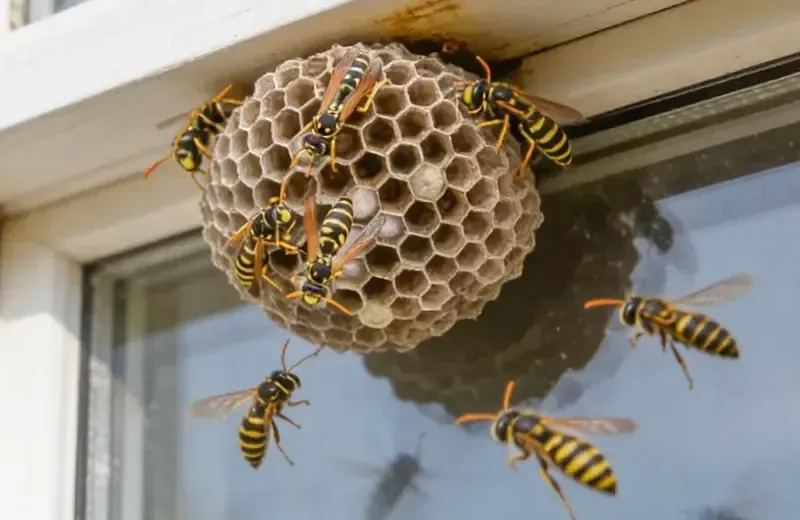
When wasps, hornets, or yellowjackets build nests near your home, professional removal helps restore safety and comfort to your outdoor spaces.
Stinging Insect Control in Iowa
Your yard should be a place you actually enjoy, and stinging insects have a way of making that harder than it needs to be. Whether it's carpenter bees drilling into your deck, yellow jackets nesting near the patio, or hornets building overhead, these insects tend to show up where you spend the most time outdoors. Janssen Pest Solutions has spent 39 years helping Iowa homeowners take back their yards with professional bee control, wasp extermination, and targeted treatment plans built around your specific property.
Here's what's covered under our Stinging Insect Control service:
- Carpenter bees
- Wasps
- Yellow jackets
- Hornets
We use EPA-registered liquid yard treatments and targeted nest removal to get ahead of the problem, not just knock it back temporarily. Just as important, we protect beneficial pollinators like honeybees by working with local beekeepers when relocation is the right call, so you're not trading one problem for another.
If you're tired of planning your outdoor time around where the wasps are, Janssen Pest Solutions is ready to help. Reach out today to schedule an inspection and get a treatment plan that actually lasts.
Learn More About Our Stinging Insect Services:
Stinging Insect Control That Keeps Your Property Functional All Season Long
Carpenter bees, wasps, yellow jackets, and hornets are a consistent problem for properties in Stinging Insect Control, especially during warmer months when nest-building activity peaks. targets these insects at the source — treating active nests, exposed wood, and harborage points around the structure so populations don't rebuild after the initial visit. Technicians assess eave lines, soffits, deck framing, fence posts, and ground-level nesting sites where stinging insects are most likely to establish colonies. The goal is targeted elimination and a treated barrier that discourages re-nesting throughout the season.
Here is what to expect from the treatment process:
- A technician inspects the exterior of the structure, identifying active nests, carpenter bee entry holes, and high-activity flight zones around eaves, overhangs, and wood surfaces
- Active aerial nests from wasps, yellow jackets, and hornets are treated directly using appropriately labeled products that reach the interior of the nest and eliminate the colony
- Carpenter bee galleries and surrounding wood surfaces are treated to kill adults present and deter new females from boring into the same areas
- A residual application is applied to playground equipment, along eave lines, window frames, porch ceilings, and other structural surfaces where stinging insects commonly build or return
- The technician notes any conditions — like exposed untreated wood, overgrown shrubs near the foundation, or ground-level voids — that increase the likelihood of future nesting activity
Why Janssen Pest Solutions Is the Right Choice for Stinging Insect Control in Iowa
Janssen Pest Solutions understands how stinging insect behavior shifts across Iowa's seasons and how that affects where colonies form and how treatments need to be timed. Technicians don't just knock down visible nests — they treat the structural areas and surface conditions that make a property attractive to returning insects. That approach means fewer callbacks, less repeat activity, and a more complete result for the homeowner after each visit.
Environmentally Responsible Wasp Control
At Janssen Pest Solutions, we use EPA-approved treatments that effectively target wasps and hornets while minimizing impact on beneficial insects. Our technicians carefully apply products to nesting sites and surrounding areas, ensuring your outdoor spaces remain safe for family activities.
What Happens When You Let a Stinging Insect Problem Go
Wasps, hornets, yellow jackets, and carpenter bees are a regular part of life here, but that doesn't mean you have to live with them. When a nest gets established on or near your home, the risk goes up fast — and ignoring the problem only makes it worse.
A small nest in early spring can become a full colony of thousands by midsummer. Yellow jackets and hornets are especially aggressive when their nests are disturbed, and bald-faced hornets are known to sting repeatedly without much provocation. Beyond the health risk, carpenter bees bore into wood fascia, decks, and siding, and wasps building inside wall voids or attic spaces can cause real structural damage over time.
Signs You Have More Than One Nest to Worry About
If you're seeing heavy stinging insect activity around your home, there's a good chance multiple nests are involved.
Here's what to watch for in and around your property:
- Wasps or yellow jackets flying in and out of a specific point in your roofline, siding, or ground
- Carpenter bee holes along wooden trim, railings, or deck boards
- Paper nests under eaves, inside sheds, or tucked into bushes and trees
- Increased swarm activity, especially later in the season when colonies are largest
- Indoor sightings of wasps or hornets, which can point to a nest inside a wall or attic
Professional Carpenter Bee Extermination and Treatment
Carpenter bees bore into wood structures like decks, fascia boards, siding, and railings, creating tunnels that weaken the wood over time. On their own, they don't cause damage as fast as termites, but here's the thing — those entry holes attract woodpeckers. Woodpeckers tear into the wood to get to the larvae, and that combination of boring and pecking can lead to serious structural damage if it goes untreated.
At Janssen Pest Solutions, our carpenter bee treatment focuses on reducing active populations and making your wood less appealing for future activity. We apply targeted insecticidal dusts directly into the tunnels to eliminate bees and larvae, and we treat exposed wood surfaces to deter new bees from boring in. Because carpenter bees are persistent and can return seasonally, our approach is built around long-term control and prevention rather than a one-time fix.
Complete and immediate removal isn't something any honest pest control company can guarantee with carpenter bees, but consistent treatment and prevention go a long way toward protecting your property. If you're seeing round holes in your wood or noticing woodpecker activity around your home, it's worth getting a professional assessment sooner rather than later.
Frequently Asked Questions
Are your treatments safe for kids and pets?
Yes, of course! Your safety is our top priority. We use products and application methods that are designed to be effective and produce results, while also being safe for humans, pets, and the environment when used as directed. Our technicians are trained to apply treatments with care and responsibility.
What should I do if I find a nest near my home?
Stay away from it and don’t try to spray or knock it down. Call a professional—some nests house thousands of aggressive insects.
Can you treat for stinging insects in walls or attics?
Yes. We have tools and techniques to safely locate and treat hidden nests, including those in soffits, vents, or behind siding.
Do carpenter bees sting?
Yes, but only female carpenter bees can sting, and they generally do so only if they feel threatened or provoked. Either way, we never recommend attempting to get rid of carpenter bees yourself; it's essential to have a professional address the problem as soon as possible.
How can I tell if I have a wasp or hornet problem?
Signs include frequent insect activity, visible nests under eaves, decks, or trees, and buzzing sounds from walls or attics. We can identify the species and the level of infestation.
Is it dangerous to try and remove a nest myself?
Yes! Many stinging insects are highly aggressive when their nest is disturbed. DIY removal can lead to serious injury—especially if you’re allergic or the nest is hidden.
Stinging Insect Control Service Area
For 39 years, Janssen Pest Solutions has helped homeowners and businesses in the area get rid of wasps and hornets safely and effectively — check out the cities and towns nearby where our Stinging Insect Control service is available: