
About Wasps
Wasps are common stinging insects found throughout the United States and are often seen building nests around homes, including under eaves, in attics, inside wall voids, in trees, and around decks or sheds. Unlike bees, many wasp species can sting repeatedly, and they tend to become highly defensive when their nest is disturbed, making them a significant nuisance
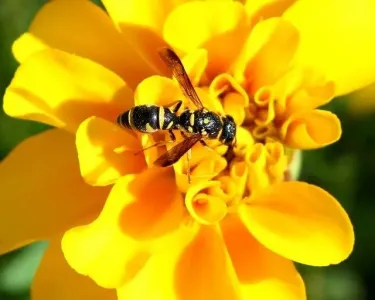
and potential hazard for homeowners. Colonies can range from a small handful of wasps in early spring to several thousand individuals by late summer, when populations peak, and food sources become more limited, often increasing their aggression around outdoor gatherings.
Wasps are generally predatory insects that feed on other pests like flies, caterpillars, and spiders, which can make them beneficial in natural outdoor environments. However, their tendency to nest in close proximity to people creates safety concerns, especially for those who are allergic to stings. A single sting can cause intense pain, swelling, and in some cases, severe allergic reactions that require immediate medical attention. Disturbing or attempting to remove an active nest without proper protection can quickly trigger defensive swarming behavior from the colony.
Homeowners should be cautious of early nest development, which often appears as small, paper-like structures in sheltered areas around the home. Preventative steps such as sealing cracks and gaps in exterior walls, keeping outdoor food and drinks covered, managing trash properly, and reducing standing water can help limit attractants. Addressing wasp activity early in the season is key, as small nests are much easier and safer to manage before colonies expand into large, aggressive populations later in the year.