
About Termites
Termites are small, soft-bodied insects that belong to the order Isoptera and are often mistaken for ants due to their similar size and colony-based behavior. However, they can be identified by their straight, bead-like antennae, broad waist, and uniform body shape that lacks the narrow “pinched” waist seen in ants. Most termites are pale or creamy white in color, though some species may appear slightly darker, especially reproductive forms. They typically measure from a few millimeters up to about a centimeter in length, and when present in their reproductive stage, they may have two pairs of wings that are equal in size, narrow, and delicate, which they shed after swarming.
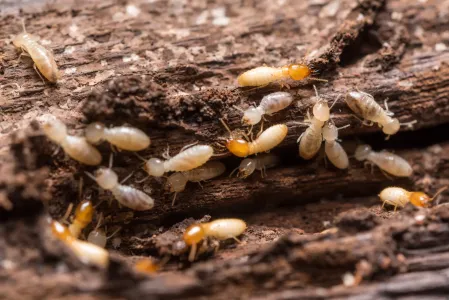
One of the most distinctive features of termites is their highly organized social structure. They live in large colonies made up of different castes, including workers, soldiers, and reproductive termites, each with a specific role that supports the survival of the colony. Termites are also unique in their ability to digest cellulose, the main component of wood and plant material, thanks to symbiotic microorganisms in their digestive systems. This ability allows them to break down dead plant matter in nature, making them important decomposers that help recycle nutrients back into the soil.
Despite their ecological benefits outdoors, termites are considered one of the most destructive pests when they invade homes or structures. They feed on wood, paper, and other cellulose-based materials, often causing extensive structural damage before being detected. Infestations can also lead to indirect health concerns, such as respiratory irritation from dust or droppings, increased moisture that encourages mold growth, and potential contamination of stored materials. Because termite damage is often hidden behind walls or beneath flooring, infestations can progress significantly before visible signs appear, making early detection and prevention especially important for homeowners.
What do termites look like?
Termites are small, pale insects that belong to the order Isoptera. They have a similar body shape to ants but can be distinguished by their straight, bead-like antennae and their broad waist that does not have the characteristic narrowing found in ants.
Termites have soft bodies that are usually light-colored, and they range in size from a few millimeters to a few centimeters in length. They have six legs and two pairs of wings that are of equal size and shape. The wings of termites are straight and narrow, whereas the wings of ants are more elongated and have a distinct vein pattern. Some termite species are wingless, and their bodies are usually darker in color. Additionally, termites have straight mandibles, while ant mandibles have a curve to them.
What are the unique characteristics of termites?
Termites are unique insects in several ways. Here are some of their key characteristics:
-
Social structure: Termites are highly social insects that live in large colonies with specialized castes, including workers, soldiers, and reproductive individuals.
-
Digestive system: Termites have a unique ability to digest cellulose, which is the main component of wood and other plant materials. They do this through the help of symbiotic microorganisms living in their digestive system.
-
Habitat: Termites build intricate nests or mounds, often made of soil and saliva, to protect themselves and their colonies. Some termite species also build nests out of mud or carton, which is a mixture of soil, saliva, and feces.
-
Role in an ecosystem: Termites play an important role in the ecosystem as decomposers, breaking down dead plant material and returning nutrients to the soil.
-
Damage potential: While termites are ecologically important, they can also cause significant damage to wooden structures and crops, making them a significant pest for humans.
What are the risks of having a termite infestation?
While termites do not pose a direct health risk to humans, a termite infestation in your home or building can lead to a number of health concerns indirectly. Here are some of the health risks associated with termite infestations:
-
Allergic reactions: Some people may be allergic to termite droppings or dust, which can trigger allergic reactions such as asthma, bronchitis, and other respiratory problems.
-
Mold growth: Termite infestations can lead to moisture buildup and water damage, which can create ideal conditions for mold growth. Mold spores can cause respiratory problems and exacerbate allergies and asthma.
-
Structural damage: Termites can cause extensive damage to the structure of a building, compromising its stability and creating safety hazards for occupants.
-
Contamination: Termite infestations can contaminate food sources, causing health risks for humans and pets.