
About Spiders
Spiders are ancient arthropods believed to have existed for more than 200 million years, making them one of the most successful and adaptable groups of predators on Earth. Today, there are over 40,000 known spider species worldwide, with approximately 3,400 found in North America alone. They occupy nearly every terrestrial habitat, from forests and fields to basements and attics, and play a major ecological role in controlling insect populations.
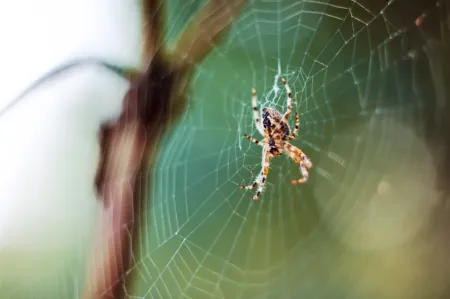
Contrary to common belief, spiders are not insects. They belong to the class Arachnida, making them more closely related to ticks, mites, and scorpions than to ants or flies. One of their most recognizable features is their eight legs, along with a body divided into two main segments and specialized mouthparts called chelicerae, which often contain venom used to immobilize prey. Most spiders also produce silk from spinnerets located at the rear of their abdomen, which they use to create webs, wrap prey, build egg sacs, or move through their environment.
Although spiders are often feared, the vast majority of species are harmless to humans and are actually beneficial because they reduce populations of flies, mosquitoes, and other nuisance insects. Only a small number of species are considered medically significant. Spiders typically enter homes in search of shelter, warmth, or food, especially during seasonal changes. Indoors, they are commonly found in quiet, undisturbed areas such as corners, basements, crawl spaces, and garages. While their presence can be unsettling, they are usually a sign of an existing insect food source rather than an infestation on their own.
What do spiders look like?
A spider’s body consists of an abdomen, cephalothorax, eight six-jointed legs, and an exoskeleton. Most spiders have eight eyes which, along with the mouth, fangs, brain, stomach, and glands, are located in the cephalothorax. The spider’s spinnerets, which produce silk used to create webs, are located at the back of the abdomen. Spiders don’t have ears. Rather, their legs are covered with hairs that sense vibrations and smells.
Spiders vary in color and size depending on species. The body of the largest spider in the world, the Goliath bird-eating tarantula, can grow to one foot, though most spiders in the United States are 1/4” to 1” in length, with females usually larger than males.
After mating, female spiders create a sac filled with as many as a thousand eggs. These eggs hatch into spiderlings, which then grow into adults. Spiders shed and replace their exoskeleton multiple times – a process called molting – until they have reached full size. Female spiders in the United States typically live 1-3 years, while male spiders generally die within a few months.
What are the unique characteristics of spiders?
All spiders have the ability to spin silk which they use to create webs. Spider silk strands are made of protein and are considered to be the strongest natural fiber, able to withstand more stress proportionally than steel. However, not all spiders build webs. Some, including the Carolina wolf spider, live on or below ground.
What are the habits of spiders?
Spiders prey on insects, small animals, and other spiders; they generally do not eat plant materials. Many spiders rely on their webs to entrap their victims, while others are predatory, going out in search of their next meal. While spiders are not attracted to light, many of the insects they eat are, so spiders may be found near light sources.
Spiders are cold-blooded, which means they are comfortable in cooler weather and not inclined to seek warmth. In cold weather, they can become more dormant, but they can easily survive in below-freezing temperatures.
What are the risks of having a spider infestation?
Spiders can be found just about anywhere. They tend to like hidden areas that are quiet and close to food and water sources. Indoor spiders can be found in old boxes, closets, shelves, basements, storage areas, garages, and anywhere else there is clutter. Outdoor spiders often take up residence in piles of wood, under rocks and debris, and in vegetation and wooded areas.
What are the risks of spiders?
While spiders can be beneficial – eating insects and other pests – some species can also be harmful to people and animals. Spider fangs emit venom which, depending on the type of spider, can produce symptoms ranging from very mild to lethal. Possible symptoms of a spider bite include swelling, skin lesions or welts, rash, itching, blistering, and pain around the bite area. Spider bites can also trigger allergic reactions, difficulty breathing, muscle pain or cramping, nausea and vomiting, fever, sweating, and headaches. In rare cases, spider venom can also cause the tissue around the bite to die, paralyze the nervous system, or result in death.