
About Rodents
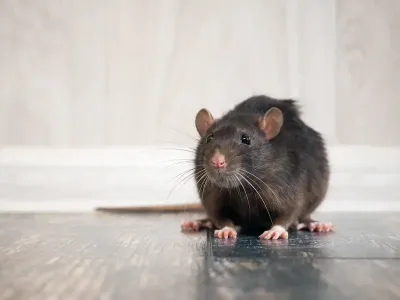
Rodents are among the most common and persistent invaders in homes across the United States, capable of squeezing through extremely small openings—mice can fit through gaps as small as a dime (about 1/4-inch), while rats can enter through holes the size of a quarter (about 1/2-inch). Once inside, they quickly establish nesting areas in walls, attics, basements, and crawl spaces, often going unnoticed until populations have already grown. Their ability to adapt to nearly any environment makes them especially difficult to control once established indoors.
Rapid Reproduction and Behavior
Rodents reproduce at an extremely fast rate, which is one of the main reasons infestations escalate so quickly. A single female mouse can produce up to 35 offspring per year, while rat populations can grow even faster under ideal conditions. Rodents also have continuously growing incisor teeth, which forces them to gnaw constantly on materials like wood, plastic, insulation, and even electrical wiring. This behavior not only causes structural damage but can also create serious fire hazards within homes.
Health Risks and Contamination
Beyond property damage, rodents pose significant health risks. They are known carriers of more than 35 diseases that can be transmitted to humans, including hantavirus, salmonellosis, and leptospirosis. According to the CDC, rodents can contaminate up to 10 times more food than they actually consume through droppings, urine, and hair. Because of this, even a small infestation can quickly become a major health concern for households.
Prevention and Early Detection
Preventing rodents from entering the home is far easier than removing an established infestation. Homeowners should seal cracks and openings in the foundation and exterior walls, eliminate food and water sources, and store food in airtight containers. Early warning signs include droppings, gnaw marks, scratching sounds in walls, and unusual pet behavior. Addressing these signs quickly is critical, as early intervention helps prevent rodents from multiplying and causing more extensive damage over time.