
About Fleas
Fleas are small, wingless parasitic insects that survive by feeding on the blood of warm-blooded hosts. They have existed for more than 100 million years and are believed to have once fed on dinosaurs, showing just how long they have adapted to life as efficient blood-feeding parasites. Despite their size, fleas are highly specialized, with strong hind legs that allow them to jump long distances relative to their body, helping them quickly move between hosts or onto new ones. Of the roughly 2,000 flea species found in the United States, the most common is the cat flea, which is responsible for most household infestations.
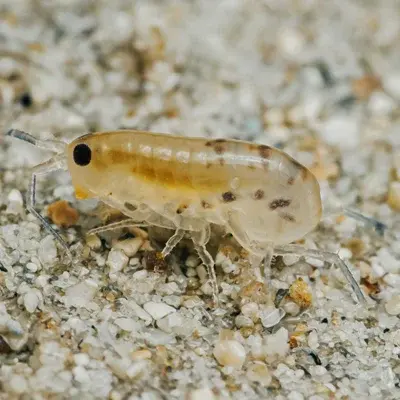
Although named the cat flea, this species is not limited to cats and readily feeds on a wide range of animals, including dogs, humans, raccoons, ferrets, skunks, and some bird species. Fleas are typically introduced into homes through pets or wildlife and can quickly spread into carpets, bedding, furniture, and cracks in flooring. Once inside, they reproduce rapidly, with eggs falling off the host and developing in the environment rather than staying on the animal, which allows infestations to persist even when adult fleas are not always visible on pets.
A flea’s life cycle includes four stages—egg, larva, pupa, and adult—which can progress quickly under warm and humid conditions. A single female flea can lay dozens of eggs per day, leading to rapid population growth once an infestation begins. Because most of the flea population exists in immature stages hidden in the environment, infestations are often more widespread than they initially appear and can be difficult to eliminate without treating both the pet and the surrounding living areas.
Fleas are more than just a nuisance, as their bites can cause significant itching, skin irritation, and allergic reactions in both pets and humans. In severe cases, repeated biting can lead to stress, hair loss, and secondary skin infections in animals. Fleas can also carry and transmit certain pathogens and parasites in some situations. Due to their fast reproduction and ability to hide in soft furnishings and flooring, effective control typically requires thorough and repeated treatment of both animals and indoor environments to fully break their life cycle.