
Wasps vs. Bees - Whats The Difference?
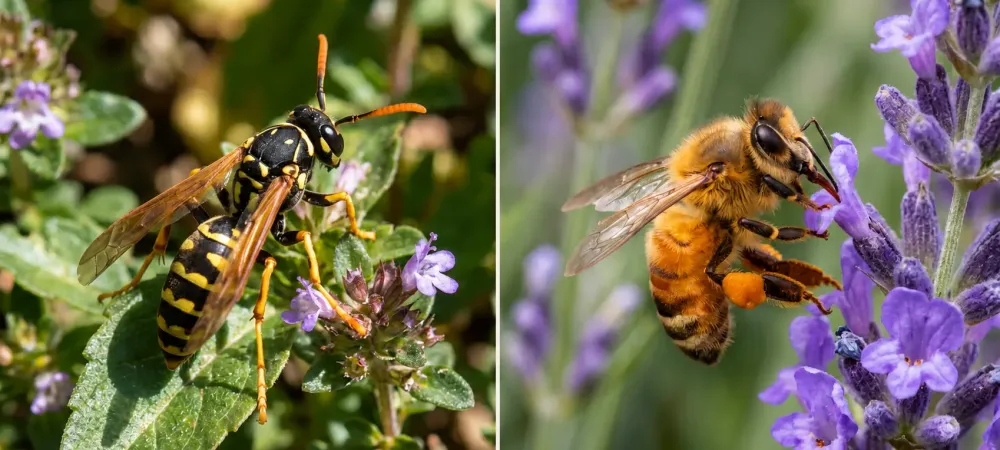
Bees and wasps are easy to confuse, especially when they are flying quickly around flowers, decks, patios, or outdoor food. While both insects can sting, they look and behave differently. Identifying them correctly matters because bees are important pollinators, while wasps are more likely to become aggressive around nests, food, and high-traffic areas.
Here are the main differences homeowners should know:
- Wasps usually have smooth, narrow bodies.
- Bees usually have rounder, fuzzy bodies.
- Wasps are often more aggressive near nests and food.
- Bees are usually focused on pollination unless threatened.
- Wasps can typically sting more than once.
- Honey bees usually sting once and leave the stinger behind.
What Does a Wasp Look Like?
Wasps usually have a slimmer, more defined body than bees. They often have a narrow waist between the middle and lower parts of the body, which gives them a sharper, more segmented appearance. Their bodies are usually smooth and shiny instead of fuzzy.
Common wasp features include:
- A narrow waist between the thorax and abdomen.
- Smooth, shiny bodies with little visible hair.
- Bright yellow and black markings, though some species may be brown, red, or metallic-looking.
- Long legs that may hang down while flying.
- A more angular body shape than most bees.
Homeowners commonly run into paper wasps, yellowjackets, and hornets. Paper wasps are often seen around eaves, porch ceilings, and deck railings. Yellowjackets may nest underground or in wall voids, which can make them harder to spot until activity increases.
What Does a Wasp Sting Look Like?
A wasp sting often causes sharp pain right away, followed by redness, swelling, and irritation around the sting site. The area may form a raised welt and feel warm or itchy for several hours.
Wasp stings are different from many bee stings because:
- Wasps can sting more than once.
- The stinger usually does not remain in the skin.
- Pain and swelling may appear quickly.
- Multiple stings are possible if the nest is disturbed.
- Reactions can be more serious for people with allergies.
Wasps are more likely to sting when they feel their nest is threatened. This is why activity near rooflines, shrubs, wall gaps, or underground nest openings should be handled carefully.
What Does a Bee Look Like?
Bees usually look rounder, thicker, and fuzzier than wasps. Their body hair helps them collect and carry pollen, which is one of the easiest visual clues to look for. Their coloring is often softer than a wasp’s, with golden brown, black, or muted yellow tones.
Common bee features include:
- A thicker, rounder body shape.
- Fuzzy or hairy texture.
- Golden brown, black, or dull yellow coloring.
- A less defined waist than wasps.
- Frequent activity around flowers, gardens, and blooming plants.
Common bees around homes include honey bees, bumble bees, and carpenter bees. Bumble bees are larger and very fuzzy. Carpenter bees may look similar to bumble bees, but they often have a shiny black abdomen and are commonly seen hovering near exposed wood.
What Does a Bee Sting Look Like?
A bee sting usually causes redness, swelling, soreness, and a small raised bump around the sting site. With honey bees, the stinger may remain in the skin after the sting.
Bee stings are often different from wasp stings because:
- Honey bees typically sting once.
- A honey bee may leave its stinger behind.
- Bees are usually less aggressive unless threatened.
- Stings often happen when someone steps on, swats at, or disturbs a bee.
- Swelling may stay localized unless there is an allergic reaction.
Most bees are not looking to bother people. They are usually focused on collecting pollen and nectar. However, they will defend themselves or their hive if they feel threatened.
Wasp vs. Bee: Key Differences
The fastest way to tell a wasp from a bee is to look at body shape, texture, behavior, and what the insect is attracted to. Wasps tend to look sleek and sharp, while bees look softer and fuzzier.
Key comparison points include:
- Body shape: Wasps are slim with narrow waists, while bees are rounder and thicker.
- Body texture: Wasps are smooth and shiny, while bees are fuzzy.
- Food sources: Wasps are attracted to meat, sugary drinks, fruit, trash, and other insects. Bees are drawn to nectar and pollen.
- Behavior: Wasps are more likely to act defensive, especially near nests. Bees are usually calmer unless disturbed.
- Nests: Wasps often build paper-like nests. Bees may build wax hives, wood tunnels, or ground nests.
- Stings: Wasps can sting repeatedly, while honey bees usually sting once.
This comparison is especially helpful when insects are active around patios, garbage cans, grills, gardens, or rooflines.
Are Bees or Wasps More Dangerous?
Wasps are generally more concerning around homes because they are more defensive and can sting multiple times. A hidden yellowjacket nest or a paper wasp nest near a doorway can quickly become a problem if people or pets pass by frequently.
The main risks include:
- Multiple stings from wasps.
- Allergic reactions to either bee or wasp venom.
- Nests near doors, decks, patios, play areas, or walkways.
- Hidden nests inside walls, attics, shrubs, or underground areas.
- DIY sprays that can cause insects to scatter or become more aggressive.
Both bees and wasps can be dangerous for someone with a sting allergy. Severe swelling, trouble breathing, dizziness, or symptoms beyond the sting site should be treated as a medical emergency.
Why Bees Are Important
Bees can become a concern when they nest too close to people, but they also play an important role in the environment. Many plants, gardens, trees, and crops rely on bees for pollination.
Bees are important because they help:
- Pollinate flowers and gardens.
- Support fruit, vegetable, and crop production.
- Maintain healthy plant growth.
- Support local ecosystems.
- Provide food sources for other wildlife.
Because bees are beneficial, identification matters before treatment. In some situations, relocation may be a better option than elimination, depending on the species and nest location.
What to Do if You Find a Nest
If you find a nest, avoid disturbing it until you know what insect you are dealing with. Spraying, knocking down, or blocking a nest entrance can increase activity and put people nearby at risk.
A safer approach includes:
- Watch activity from a distance.
- Look for where insects are entering and exiting.
- Avoid sealing holes while insects are active.
- Keep children and pets away from the area.
- Do not attempt removal if the nest is large, hidden, or close to living spaces.
- Contact a professional for identification and safe treatment options.
Proper identification helps determine whether the insects are bees, wasps, hornets, or yellowjackets. From there, the safest next step depends on the species, nest location, and level of activity.