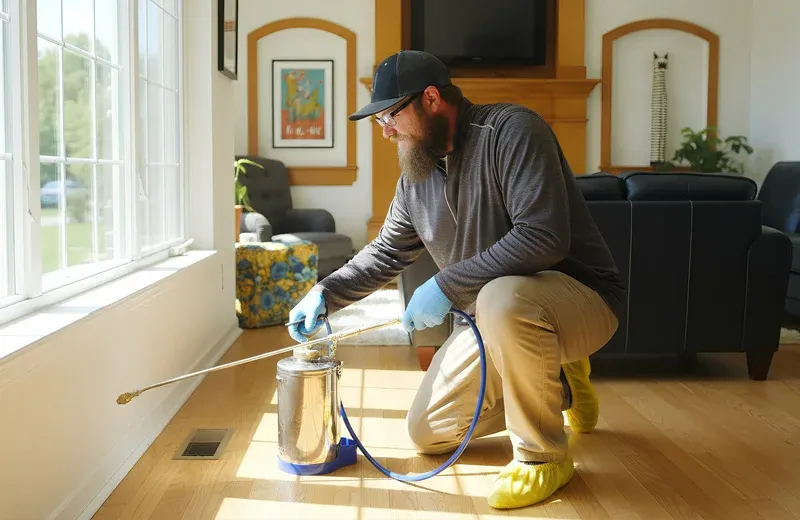
Pest Control Service in Iowa
Iowa homeowners deal with pest pressure throughout the year. Changing seasons bring different pest activity, which means protecting a home requires more than occasional treatments. A structured pest control program helps address these seasonal shifts and keeps common pests from establishing themselves inside the home.
We approach pest control as a year-round preventative control process rather than a one-time fix. By focusing on exterior protection, targeted treatments, and routine service visits, our technicians help reduce pest activity before it becomes a larger problem. This proactive approach allows us to address pest pressures as they develop and maintain consistent protection for homes across Iowa.
Our pest control service protects from common household pests, including:
- Ants
- Spiders
- Cockroaches
- Wasps
- Earwigs
- Silverfish
- Beetles
- Box elder bugs
- Stink bugs
- Rodents
What Happens When a Pest Control Technician Shows Up at Your Door
Most homeowners don't realize how much seasonal timing matters with . Ants push through foundation cracks in spring, termites swarm from March through October, spiders work their way inside from April onward, and mice start looking for entry points as temperatures drop in fall. A one-time spray doesn't account for any of that. The approach that actually works is a recurring schedule — five targeted visits per year, each timed to address what's actively threatening your home that season, plus a scheduled interior winter service to cover what cold weather pushes indoors.
Here's how the process works from the first call to ongoing protection:
- A technician assesses your home's exterior, foundation, and entry points to identify current activity and risk areas.
- Treatment is applied to the foundation perimeter, eaves, window and door frames, and any zones where pest pressure is present.
- Interior treatments are performed during the scheduled winter visit and any time interior activity is reported.
- After an initial interior and exterior onboarding service, exterior visits repeat in April, June, August, October, and an interior/exterior winter service, so coverage stays aligned with seasonal pest cycles.
- If pest activity returns between scheduled visits, a follow-up service is provided under the pest-free guarantee at no additional charge.
Why Janssen Pest Solutions Is the Right Choice for Recurring Pest Protection in Iowa
Janssen Pest Solutions builds its recurring program around how Iowa pest activity actually behaves across the calendar year, not a generic national schedule. Technicians know when termite swarm season starts, when mice begin seeking interior access, and when spider pressure along foundations peaks, and the five-visit schedule reflects all of that. Our pest-free guarantee means the protection doesn't end between visits. If something breaks through before your next scheduled service, our exterminators come back and handle it. That's a straightforward commitment, and it's the kind of reliability that makes a recurring pest program worth having.
If It Comes Back, So Do We
At Janssen Pest Solutions, we stand behind every service we perform. You deserve results that actually last, and we believe our work should deliver exactly that.
If pests covered under your service plan come back, we come back too — at no extra charge, no questions asked.

Green Guard Recurring Pest Control Plans Make a Difference
A one-time treatment can knock back an active problem, but it doesn't do much to stop the next wave. Pest pressure in Iowa shifts with the seasons — ants start pushing in during spring, spiders become more active from April through October, and mice start looking for warm entry points come fall. A residential pest control plan built around that seasonal cycle keeps protection in place all year, not just when things get bad.
According to the National Pest Management Association, pest infestations affect approximately 84% of American homeowners each year. That's a significant number, and it speaks to how persistent pest pressure really is, regardless of how clean or well-maintained a home is.
Our Green Guard plans are built around that reality. Each plan runs five scheduled treatments per year, April, June, August, October, and a dedicated interior/exterior winter service, so your home stays covered through every season. Green Guard Pro covers general pest control and rodent protection. Green Guard HD adds termite protection through the Sentricon Colony Elimination System. Green Guard Platinum goes further with 6-7 annual treatments and summer-long mosquito control for comprehensive, year-round coverage. And if something shows up between visits, our pest-free guarantee means we come back and take care of it, no questions asked.
Integrated Pest Management
Integrated Pest Management, or IPM, is the approach behind every Green Guard plan. Instead of just applying product and calling it done, IPM combines inspection, targeted treatment, and prevention to address what's actually driving pest activity at your property.
An IPM approach works across several layers of protection:
- Identifying entry points and conditions around the home that attract or shelter pests
- Applying treatments where pest activity is concentrated, including exterior perimeters, foundation walls, entry points, and problem areas inside
- Adjusting treatment methods based on the pest, the season, and what's happening at your specific property
- Using the lowest-impact products necessary to get results while reducing unnecessary chemical exposure
It's a more effective method over time because it accounts for the bigger picture, not just what's visible right now.
Treatments That Put Your Family First
Our technicians follow a thoughtful, environmentally responsible approach when performing pest control treatments. Products are applied carefully and only where they are needed to address pest activity around your home.
This allows your home to be treated thoroughly while keeping everyday routines comfortable for your family.
Frequently Asked Questions
Do I need to leave my house during treatment?
Nope! For most general pest control treatments, you do not need to leave your home. Our products are applied carefully and in targeted areas, so you can go about your day with minimal disruption. If a specific treatment ever requires special precautions, we’ll let you know ahead of time.
Do you offer one-time treatments or recurring plans?
Yes, we offer both one-time treatments and recurring pest control plans. While a one-time service can be effective for addressing an immediate issue, we typically recommend recurring treatments for long-term protection. Most pests are persistent and tend to return without ongoing prevention. Our recurring plans are designed to keep your home protected year-round and stop infestations before they start!
Do you treat for pests inside and outside?
Yes, we treat both inside and outside your home. Typically, we start with an interior treatment to address any existing pest activity indoors. Once things are under control, we focus on regular perimeter treatments around the exterior of your home to keep bugs from getting back inside. If you ever notice activity indoors again, we’re happy to treat the inside as needed—but the goal of our recurring service is to stop pests before they ever make it in!
How do I know if I need professional pest control?
If you own a home—especially in an area with high pest activity—professional pest control is a smart investment. Even if you don’t see bugs regularly, pests often hide and breed in hard-to-reach places. A recurring pest control plan acts like insurance: it helps prevent issues before they start, and if a problem ever does pop up, you’ve got a pro ready to handle it right away. When you pay for professional pest control, you are truly paying for peace of mind.
How much does your pest control cost?
Pricing for pest control varies based on several factors, including the plan you choose, the size of your home, and the type of infestation (if any). Since every situation is unique, we provide custom quotes tailored to your needs. Just give us a call, and we’ll be happy to discuss your options and offer a personalized estimate which typically includes an initial fee and monthly or quarterly pricing for recurring plans.
What types of pests do you treat?
We treat a wide range of common household pests, including ants, spiders, cockroaches, silverfish, millipedes, crickets, earwigs, and more. Our general pest control services are designed to target the bugs you're most likely to regularly encounter in and around your home.
Pest Control Service Area
Janssen Pest Solutions has been providing Pest Control services to communities near you and across the region for over 39 years — see if your city or town is listed below: