
Boxelder Bugs: What Homeowners Should Know
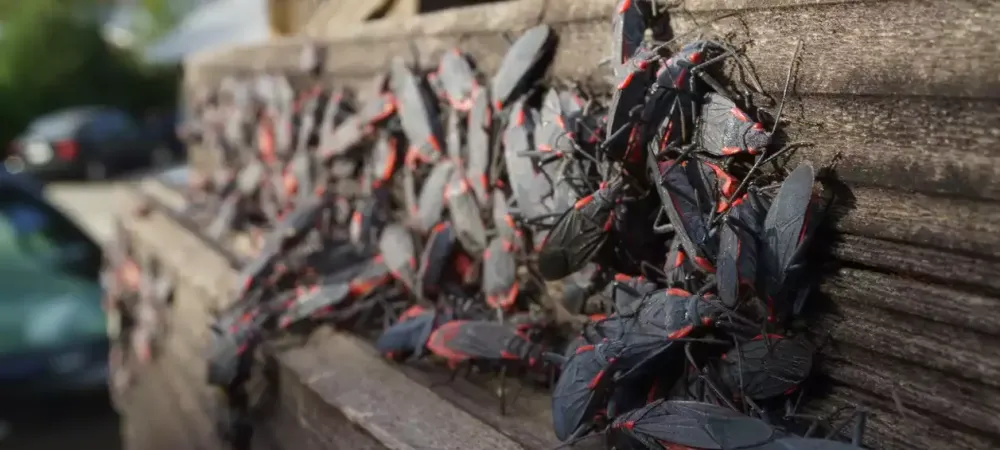
Boxelder bugs are easy to recognize once you know what to look for. Many homeowners describe them as a black bug with orange stripes because of the red-orange lines on their wings and backs. They are most noticeable in the fall, when they gather on warm, sunny sides of homes before trying to move into protected spaces for winter.
While boxelder bugs can be annoying, they are usually more of a nuisance than a serious threat. Understanding what attracts them and how they get inside can help you reduce activity before they become a bigger indoor problem.
What Do Boxelder Bugs Look Like?
Adult boxelder bugs are usually black or dark gray with orange-red markings along the back and wings. Their bodies are long and narrow, and they have six legs and long antennae. Younger boxelder bugs, called nymphs, may look brighter red before they fully mature.
Common identifying features include:
- Black or dark gray body
- Orange-red lines on the wings and back
- Long, narrow body shape
- Six legs and long antennae
- Bright red nymphs during earlier life stages
Because of their coloring, boxelder bugs are often confused with other fall insects. The easiest clue is their distinct black body with orange stripes, especially when they gather in groups on siding, brick, stone, or window frames.
What Attracts Boxelder Bugs?
Boxelder bugs are most often associated with boxelder trees, especially female boxelder trees that produce seeds. They may also feed on maple and ash trees. During the warmer months, they stay outside and feed on seeds, leaves, and plant material.
In the fall, their behavior changes. Instead of focusing only on food, they begin looking for warm, protected places to overwinter. This is why they often gather on sunny sides of homes before slipping into cracks and gaps.
Common boxelder bug attractants include:
- Female boxelder trees
- Maple and ash trees
- Sunny exterior walls
- Warm brick, siding, stone, or stucco
- Leaf litter and yard debris
- Cracks around windows, doors, vents, and rooflines
Homes with a lot of afternoon sun may see more activity on one side of the house. Once boxelder bugs gather there, small exterior openings can give them a way indoors.
Are Boxelder Bugs Harmful?
Boxelder bugs are not usually harmful to people, pets, or homes. They do not damage wood like termites or carpenter ants, and they are not known for spreading disease. In most cases, the main issue is the number of bugs gathering on or inside the home.
That said, they can still create problems when they enter in large numbers. If crushed, boxelder bugs may leave stains on walls, curtains, furniture, or other surfaces. They can also release an unpleasant odor when disturbed.
Important things to know include:
- Boxelder bugs do not cause structural damage
- They do not usually reproduce indoors
- They are not considered a major health threat
- They may stain surfaces if crushed
- Large groups can become frustrating inside the home
Their presence indoors does not usually mean they are nesting inside. Most are simply overwintering in hidden spaces until temperatures warm up again.
Do Boxelder Bugs Bite?
Boxelder bugs are not known for biting people, and they do not seek out humans or pets. They do not feed on blood, and they are not considered aggressive.
A rare bite or skin irritation may happen if one is handled or pressed against the skin, but this is not a common concern. For most homeowners, the bigger issue is the annoyance of seeing them around windows, walls, and warm indoor rooms.
Boxelder bugs are mainly a nuisance because they:
- Gather in large numbers
- Enter homes through small gaps
- Appear indoors during warm winter days
- Leave stains if crushed
- Release odor when disturbed
Why Boxelder Bugs Come Inside In The Fall
Boxelder bugs come inside because they are looking for shelter, not because they want to feed on household items. As temperatures drop, they gather on warm exterior surfaces and look for cracks that lead into wall voids, attics, or other protected areas.
They often enter through:
- Window and door gaps
- Damaged screens
- Attic vents
- Siding gaps
- Utility openings
- Roofline cracks
- Gaps around trim and fascia
Once inside, they may stay hidden through winter. On warmer days, they can become active again and show up near sunny windows, upper floors, light fixtures, or warm walls.
How To Get Rid Of Boxelder Bugs
Getting rid of boxelder bugs starts with removing the ones you can see and reducing the ways they get inside. Indoor boxelder bugs should be vacuumed instead of crushed to avoid stains and odor. After vacuuming, empty the contents outside so they do not remain in the home.
Helpful removal and prevention steps include:
- Vacuum visible boxelder bugs instead of crushing them
- Empty the vacuum contents outside
- Seal cracks around windows, doors, siding, vents, and utility lines
- Repair damaged screens
- Replace worn weatherstripping
- Install or repair door sweeps
- Remove leaf litter and debris near the foundation
- Rinse clusters off exterior walls when activity begins
Long-term prevention works best before fall activity peaks. Once boxelder bugs are already hidden inside walls or attics, they may continue appearing indoors until the season changes.
Boxelder Bugs Vs. Stink Bugs
Boxelder bugs and stink bugs are both common fall nuisance pests, so homeowners often confuse them. Both may gather around homes, enter through small gaps, and become active indoors during warmer winter days.
The main difference is appearance. Boxelder bugs are long, narrow, and black with orange-red markings. Stink bugs are usually brown or gray and have a shield-shaped body.
Key differences include:
- Boxelder bugs are black with orange-red stripes
- Stink bugs are usually brown or gray
- Stink bugs have a wider, shield-shaped body
- Both can release odor when disturbed
- Both are mainly nuisance pests in fall
Boxelder bugs are mostly a seasonal nuisance, but they can become overwhelming when large groups gather around the home. Sealing exterior gaps, repairing screens, reducing debris, and vacuuming indoor bugs instead of crushing them can help keep activity more manageable.